

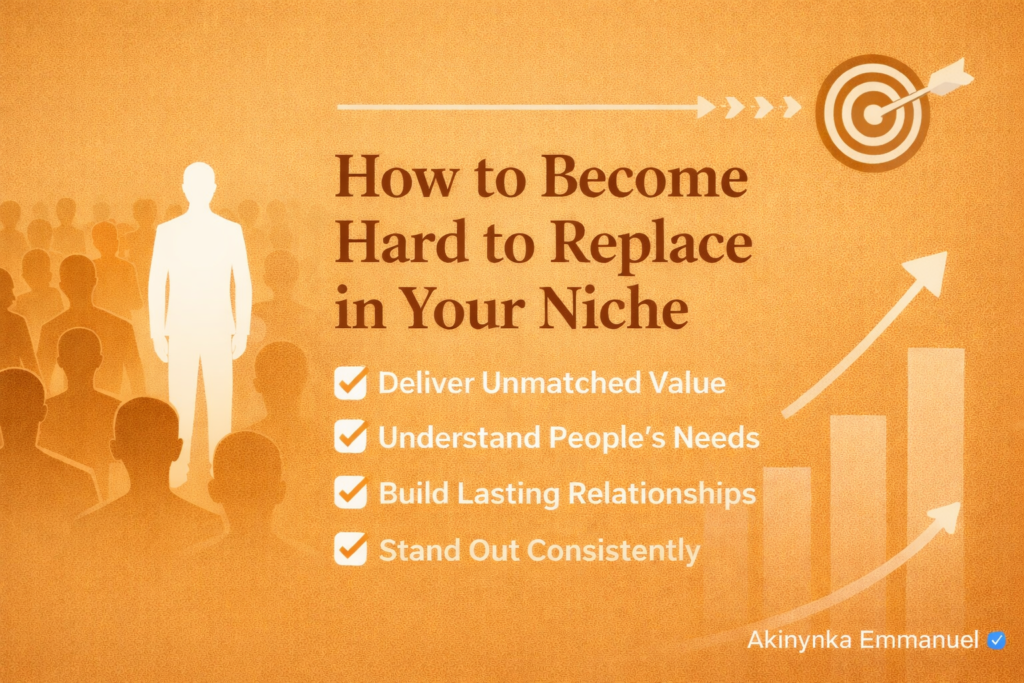
Most people think value comes from effort.
Work harder. Learn more. Add more skills. Be available all the time.
But if effort alone created value, the hardest-working people would always be the most respected, most paid, and most sought after. Reality tells a different story.
Some people do less yet seem impossible to replace. Others do a lot and remain invisible.
The difference is rarely talent. It is understanding how people experience value.
I didn’t learn this from a book alone. I learned it practically too slowly, quietly, and without confrontation.
Over time, through personal experiences, failed expectations, and watching how people make decisions, I noticed patterns that repeat across industries, workplaces, and relationships. When those patterns are ignored, people leave. When they are understood, trust grows.
People don’t announce when they stop valuing you
One of the biggest misconceptions about value is believing people will tell you when something is wrong.
Most don’t.
They don’t complain loudly.
They don’t explain in detail.
They don’t always give feedback.
They simply disengage.
A customer stops returning.
A client pauses indefinitely.
An audience stops paying attention.
Not because something dramatic happened, but because a quiet decision was made.
Understanding this is important because value is often lost silently.
Value is shaped by perception, not intention
You can intend to deliver value and still miss it.
You can care deeply and still lose people.
This is because value is not determined by how you feel about your work. It is determined by how others experience it. That experience is shaped by a few core factors that influence human decision-making more than logic or explanations.
Over time, I realized there are four major forces at play.
1. People measure value by where something takes them
Every person carries an internal vision of progress.
It may not be clearly defined, but it exists. People are constantly evaluating whether their time, money, and attention are moving them closer to that vision or keeping them stuck.
This is why effort alone is not persuasive.
People are not impressed by how hard you work unless it clearly translates into outcomes that matter to them. They want to know what changes because they engage with you.
If someone cannot connect what you do to where they want to be, hesitation follows. Value increases when you help people see that connection clearly.
2. Certainty reduces fear and friction
Uncertainty is exhausting.
When people feel unsure, they delay decisions, pull back, or look for alternatives. This is why certainty is powerful. Not certainty of perfect results, but certainty of direction, process, and responsibility.
Certainty communicates that you understand what you are doing and that you will not disappear when challenges arise. It reassures people that risk is acknowledged and managed.
In many cases, people choose certainty over brilliance. Confidence paired with clarity often outperforms talent paired with hesitation.
3. Time changes how people judge worth
How long it takes to feel value matters more than many people realize.
Delays create doubt. Silence creates discomfort. Waiting without context weakens trust.
This does not mean everything must be instant. Some outcomes take time. But people need early signals that progress is happening. Small confirmations, visible steps, and timely feedback help people stay engaged.
The shorter the distance between engagement and value, the stronger the perception of worth.
4. Effort determines whether people stay committed
Even good things are abandoned when they feel heavy.
People avoid complexity, confusion, and unnecessary friction. When something feels mentally or physically demanding, commitment drops, even if the long-term benefit is clear.
Reducing effort does not reduce value. In many cases, it increases it.
When processes are simple, expectations are clear, and engagement feels manageable, people are more likely to stay, return, and recommend.
Why most people struggle to stand out
Many people unknowingly solve one or two of these factors.
They may be clear about outcomes but slow to deliver.
They may be confident but complex to work with.
They may be fast but unclear about direction.
True value emerges when all four are addressed together.
That is when people stop comparing you easily. That is when replacement becomes difficult.
Becoming hard to replace is a long game
Value is not built overnight. It accumulates.
It is shaped by how consistently you:
- help people move forward
- reduce uncertainty
- respect time
- and remove unnecessary friction
When these things are done well, people do not just stay. They trust. They refer. They commit longer.
And when they leave, it is not because you failed, it is because their path changed.
That is the difference between being useful and being valuable.